Summary: Flat roofs are a type of roofing. Flat roofs are not too costly to install, and they provide a place to use the space above. These are made from many different materials, so you can select the best flat roof that meets your budget, climate, and decorating requirements. Flat roofs can survive as a roof if you use the right material, have a flat roof installed properly, and maintain your flat roof properly. Flat roofs are suitable for commercial buildings as well.
__________________________________________________________
Top Flat Roof Materials and Their Key Benefits
Flat Roof Replacement | Conservatory Roof Replacement | Rubber Roofing
What Are Flat Roofs?
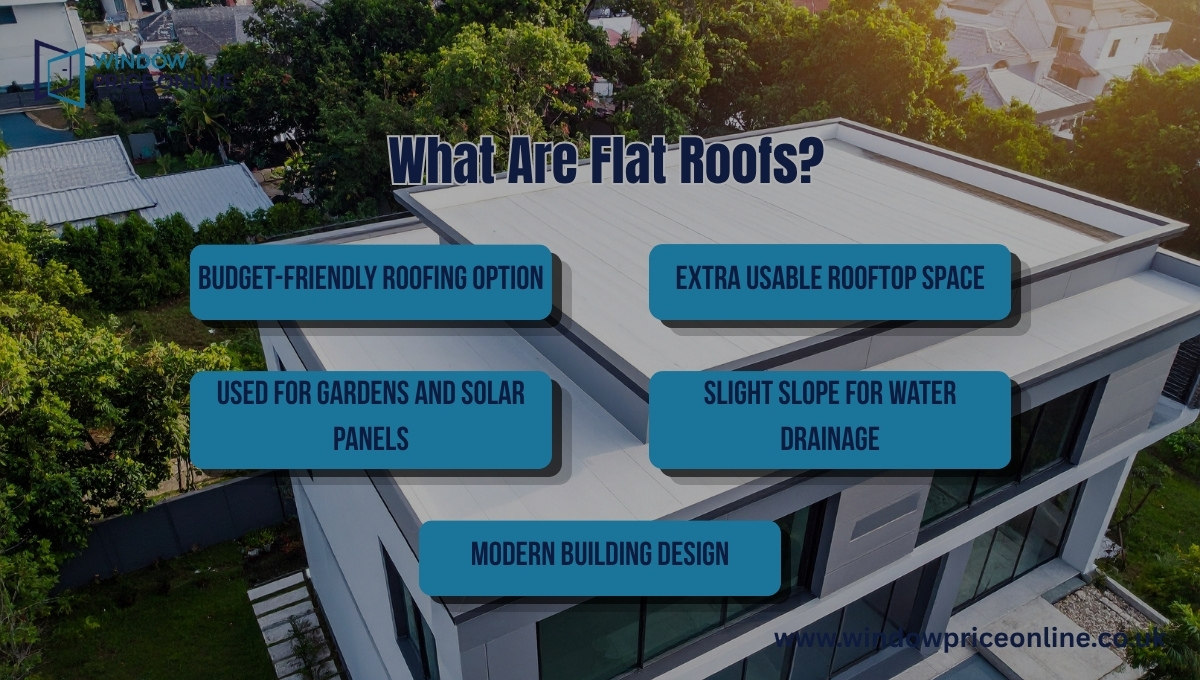
While a flat roof is not completely flat, it has some degree of slope to allow for proper drainage of rainwater. A true flat surface can provide an area for multiple uses, including:
- Rooftop gardens
- Solar panel installations
- outdoor patios
- multiple utility areas (like an air conditioning unit, water tank).
This flexibility is a major reason why so many people utilize roofs as part of their structures, both for homes and businesses. This slope, in addition to proper methods of drainage design, provides an effective means for removing water properly with a well-designed flat roof. Different flat roof materials, such as EPDM, TPO, PVC, and modified bitumen, also play an important role in durability and weather resistance.
Why Are Flat Roofs Becoming Popular?
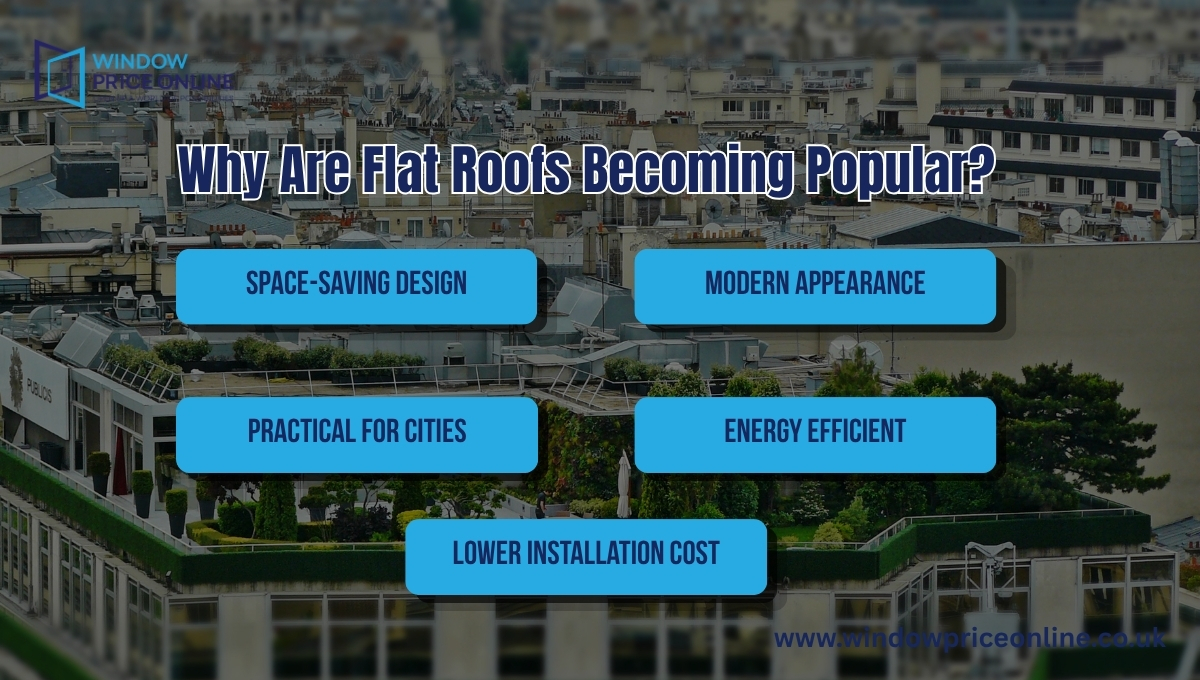
Flat roofs are not chosen only because they are more affordable. Today, people prefer them because they are practical, functional, and suit modern lifestyles. With the use of advanced roofing materials for flat roofs, they offer better durability, energy efficiency, and long-term performance, making them a smart choice for both homes and commercial buildings.
1. Space Optimization
One of the biggest advantages is usable space. A flat roof can be turned into:
- Rooftop gardens
- Outdoor seating areas
- Solar panel installations
- Storage or utility spaces
In cities where land is expensive, this extra space becomes extremely valuable. It can also be complemented with features like uPVC external doors, which improve durability, security, and modern design appeal while making better use of available space.
2. Modern Look
Flat roofs are liked by many for their tidy look. They give buildings a modern and sleek appearance with a clean horizontal line. This style fits especially well in urban areas where people prefer stylish and contemporary designs. It also works nicely with features like an aluminium roof lantern, which adds natural light and enhances the overall modern look of the building
- Allows creative and modern architectural designs
- Supports extensions and unique building shapes
- Enables rooftop use like gardens and seating areas
3. Cost Efficiency
- People prefer flat roofs because they are economical.
- They’re less expensive to construct because they take less time to complete and require less labor time to install (quickly/easily).
- Due to the speed with which they complete construction, they reduce costs associated with construction.
Types of Flat Roof Materials
Choosing the right material is the most important decision for a flat roof. Each material has its own strengths, lifespan, and maintenance needs.
1. Built-Up Roofing (BUR)
Built-Up Roofing is one of the oldest and most reliable flat roof solutions. It works very well for flat roofs and has been used for many years. It is made of multiple layers of bitumen along with strong reinforcing fabric, which helps hold the structure together and provides excellent durability and protection.
Key Characteristics:
- Has layers that cover the roof.
- Keeps water away.
- Can withstand different types of weather.
Benefits:
- Built-Up Roofing is excellent for withstanding many different weather types.
- Will last anywhere between 15 and 30 years.
- Built-Up Roofing helps prevent water from entering the building so it doesn’t leak inside.
- Built-Up Roofing will be there for you for an extended period of time.
2. EPDM Rubber Roofing
EPDM (Ethylene Propylene Diene Monomer) is a synthetic rubber membrane widely used in modern flat roofs.
Key Features:
- Flexible rubber material
- UV resistant
- Easy installation
Benefits:
- Highly durable (20–30 years lifespan)
- Resistant to extreme weather
- Low maintenance requirements
- Cost-effective long-term
3. TPO Roofing (Thermoplastic Polyolefin)
TPO roofing is a material that people are starting to use a lot in building houses and other things.
Key Features:
- TPO roofing has a white reflective surface
- TPO roofing is a heat-resistant material
- TPO roofing is a single-ply membrane
Benefits:
- By reflecting a significant amount of solar energy away from a building, TPO roofing will conserve energy.
- Cooling your home with TPO roofing will also reduce your utility bills and save you a lot of money over time.
4. PVC Roofing
PVC roofing is a strong material. It is a single-layer membrane known for being highly durable and long-lasting. It is also often used alongside features like a uPVC roof lantern, which improves natural lighting while maintaining strength and insulation in the building.
Key Features:
- It can withstand a lot of chemicals
- The seams are welded with heat
- It does not weigh a lot
Benefits:
- Roofing made out of PVC material can last for many years.
- It protects from chemical and fire damage.
- Waterproofing is another property of PVC roofing.
- Very little maintenance is required to maintain PVC roofs. PVC roofs are simple to care for.
5. Modified Bitumen Roofing
This is a version of the old asphalt roofing; it has special additives like polymers that make it stronger and more flexible. It is widely used in residential flat roofing because it offers good durability, weather resistance, and easy maintenance for homeowners.
Key Features:
- It is made from asphalt
- It has layers to make it last longer
- You can put it on with heat or special glue
Benefits:
- The durability of Modified Bitumen Roofing is great and will last for many years.
- The ability of Modified Bitumen Roofing to withstand extreme variations in temperature makes this roofing option very desirable.
- Modified Bitumen Roofing is also easy to repair if damage occurs, making the maintenance and repair of Modified Bitumen Roofing an uncomplicated task.
6. Green Roof Systems
A green roof is an eco-friendly option that supports the environment. It is a roof that is partly or fully covered with plants, helping to improve air quality and reduce heat. It also works well as a base for a flat roof extension, allowing extra usable space while maintaining natural insulation and energy efficiency.
Key Features:
- Soil and plant layers
- A special waterproof layer, underneath
- A natural insulation system
Benefits:
- It makes the air cleaner
- It reduces heat absorption
- It provides insulation, keeping the building cool in summer and warm in winter
- It makes the building look nicer
Key Benefits of Flat Roofs
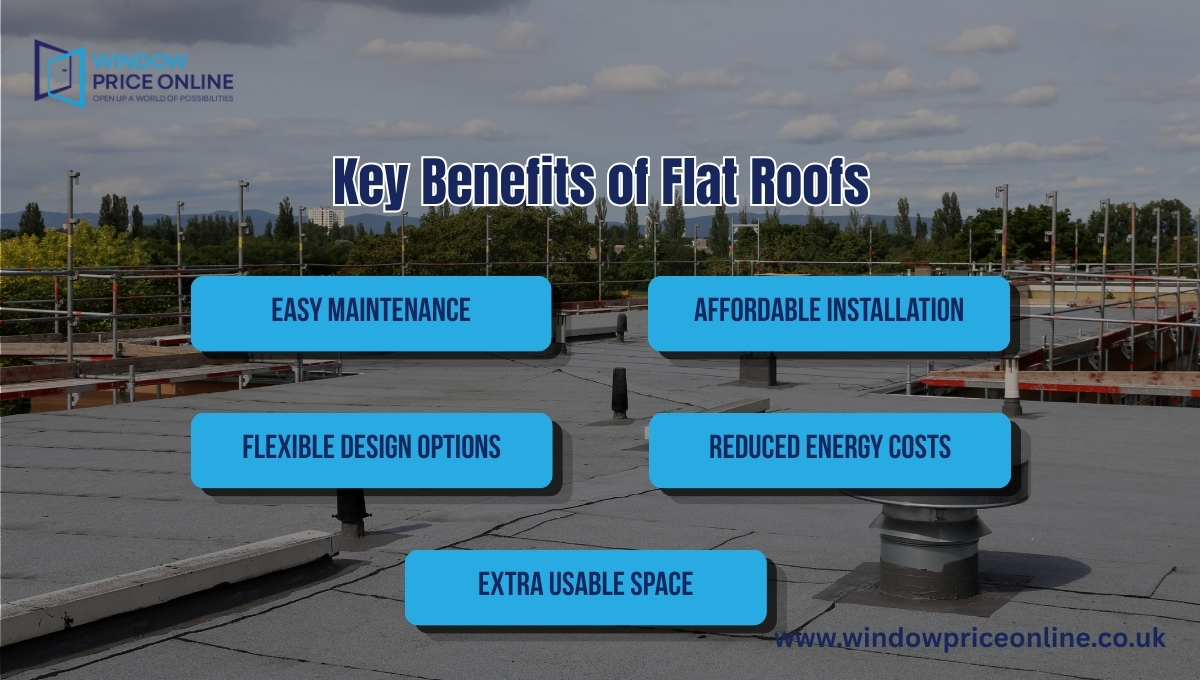
Roofs give you more than just different material options. They also come with long-term benefits.
1. Easy Maintenance
Checking and maintaining flat roofs is very easy since you can walk around on them. You don’t need special tools or equipment to check for leaks, clean them up, or do whatever else needs to be done.
2. Cost-Effective Installation
Flat roofs require fewer materials and less labor to install compared to sloped roofs, which makes them more affordable. Their simple design reduces construction time, helping projects finish faster. During flat roof installation, the process is usually quicker and more straightforward, which further saves time and overall project expenses.
3. Extra Usable Space
Rooftops without a slope (flat) will introduce additional space that can be used in many different ways; for example:
- Rooftops can be used for lounges.
- Rooftops can hold solar panel systems to produce clean, renewable forms of electricity.
- Water tanks can be placed on rooftops.
- Rooftops can also support gardens.
4. Flexibility of Architecture in the Modern World
Flat roofs let architects make really cool buildings that can look very simple or like factories or even like something from the future. The flat roofing system gives architects the freedom to make designs with flat roofs. Architects can make all sorts of things with roofs.
5. Energy Efficiency
A majority of materials used in making flat roofs reflect the sun’s heat, reducing its accumulation. In turn, there is consistency of internal temperatures and reduced costs of electricity.
Common Challenges of Flat Roofs
While flat roofs offer many benefits, they also come with a few challenges that should be properly managed to ensure long-term performance and durability.
1. Water Drainage Problems
Flat roofs can have problems with water if they are not installed correctly or if the design is bad. This is because flat roofs are not as sloped as roofs. That is why using a proper roofing solution is very important, as it helps prevent further damage and ensures long-term safety and stability.
2. Regular Roof Inspections Are Important
Routine roof inspections are critical to ensuring the longevity of a roof. Flat roofs require routine inspections. Problems with a flat roof may start very small, for example, a hairline crack or an area where the surface has worn away.
3. Weather Sensitivity
Flat roofs are really sensitive to the weather. The weather can affect how well they work if people do not take care of them. When it is cold, these materials get smaller, which can cause cracks or damage to the surface over time. Modern options like fibreglass roofing also improve durability, making the surface more resistant to cracks, leaks, and harsh environmental conditions.
6. How to Choose the Right Flat Roof Material?
Choosing the flat roof material is a big deal. It affects how long the roof lasts, how much it costs, and how well it performs in the long run. Different buildings and locations require different flat roof materials, so careful consideration is important before making a final decision. This is also true for dormer roofs, where the right material helps ensure strength, insulation, and weather protection over time.
1. Climate Conditions
The weather plays a huge role in the way your roofing system will ultimately function. For instance, if you live in an area with sunny skies, you will want to use TPO or PVC for your flat roofing material. TPO and PVC reflect sun rays and stay cooler, which will help to keep the building comfortable while saving energy costs.
2. Budget
The type of roofing material you can choose depends on your budget. When figuring out which roofing material to you will need may be determined by your budget. If you have a limited budget, it cannot be due to the costs of modified bitumen. You should also take into consideration your budget when making your choice.
EPDM is another option for roofs due to its affordability and durability over time. It does not require much maintenance, so if you are on a tight budget, you will not have to worry about spending additional money on maintenance.
3. Building Type
Various roofs are needed for different buildings. Your building type will help you make a choice about which roof type to use. For a building, you could use an EPDM roof or TPO. EPDM or TPO roofs work well for homes; they provide good durability and energy savings. For buildings, you could use PVC roofs or BUR roofs.
7. Installation Tips for Long-Lasting Roofs
A flat roof is only as good as its installation. The flat roof installation is the key to making the flat roof last. Always ensure the flat roof has a slope for drainage. When you are installing the roof, make sure to seal all the joints carefully. You should also schedule regular inspections for the flat roof to ensure everything stays in good condition. For best results, it is always recommended to hire a professional roofing installation company, as proper installation plays a major role in extending the overall life of the flat roof.
Key Points:
- Ensure proper slope for effective water drainage
- Use skilled professionals for installation work
- Select high-quality and durable materials
8. Maintenance Guide for Flat Roofs
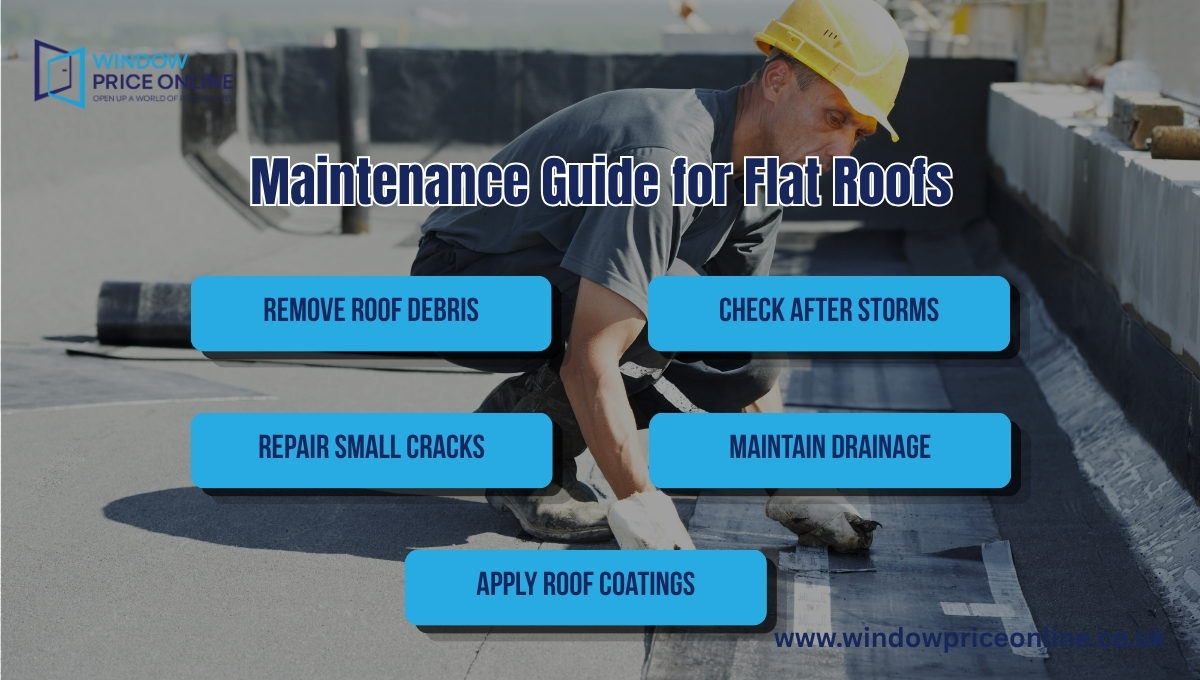
Proper maintenance keeps a flat roof durable, safe, and long-lasting. Regular care prevents small issues from turning into costly repairs and helps maintain overall performance throughout the year. This is similar to managing window replacement costs.
- Clean debris regularly
- Inspect after heavy rain or storms
- Fix small cracks immediately
- Check drainage systems
- Reapply protective coatings when needed
9. Future of Flat Roofing
Roofing is changing fast. Some new trends are:
- Solar roofs that make energy
- Green roofs, with plants
- Smart waterproof layers
- Shiny materials that save energy
Why Choose Window Price Online?
Choosing a window price online makes it easy to compare windows. You can see all styles, materials, and prices in one place. This saves a lot of time because you do not have to visit stores. When buying windows online, you can easily find ones that fit your budget. The prices are clear and simple to understand. The whole process of buying windows is faster and easier. You can trust it more. Looking at window prices online helps you get what you need. It is a way to choose windows. You can do it from home. It is simple and quick.
Conclusion
Due to their versatility, cost-effectiveness, and optimal utilization of space, flat roofing is becoming increasingly popular with today’s construction projects. With an abundance of flat roof materials choices available, the land owner can select materials based on their budget, regional climate, and aesthetic preference. Proper selection of the type of material(s), proper application, and continual maintenance can greatly increase the longevity of the flat roof. In summary, flat roofs provide a combination of function and style for today’s construction projects. If you are planning to install a new roof or upgrade an existing one, feel free to contact us for expert guidance and the best solutions tailored to your needs
FAQS
What is a flat roof?
The essence of a flat roof is a roof with a slight pitch or a small slope that allows for adequate drainage of rainwater (i.e., runoff of water). Additionally, flat roofs provide an area that is almost horizontal.
What are the advantages of using roofs?
Flat roofs provide significant financial savings, as they tend to be less expensive than typical sloped roofs. Flat roofs do not require the same amount of maintenance.
What are great materials to utilize for roof systems?
The possibilities of materials to use for a flat roof are many, such as EPDM-Rubber, PVC, TPO, Modified Bitumen, Built-Up Roof (BUR), & Green Roof Systems (vegetated).
Do flat roofs require maintenance?
Flat roofs require maintenance, like any other roofing system. Typical maintenance, such as collecting debris from the surface and repairing minor defects in the roofing system, is needed.
How long do flat roofs last?
It is difficult to estimate the longevity of flat roofs because many exterior influences can affect their lifespan.