Summary: Condensation on windows is common in UK homes, especially during cold weather. You can reduce it by controlling indoor humidity and keeping window surfaces warmer. This guide is all about the issues, what you can do today, and when upgrading your windows may be the better long-term choice. Let’s dive in:
________________________________
What Causes Window Condensation? Fixes & Prevention Guide
uPVC Window Company UK| Glass Condensation | uPVC Double Glazed Windows
Modern homes are designed to keep heat inside. This keeps rooms warm and saves energy. However, moisture can build up if there is not enough fresh air. Daily activities like cooking, showering, washing dishes, and drying clothes add moisture to the air. When this air touches cold window glass, small water drops appear. This is called window condensation. It often happens in bedrooms, kitchens, and bathrooms.
Cold windows can make the problem worse. Old windows may not keep heat inside properly. Damaged window frames or seals can also let heat escape. You can reduce condensation by keeping your home well-ventilated. Open windows for a short time and use extractor fans to remove extra moisture. However, if the problem continues, better windows or insulation may help.
Condensation is more common in winter because window glass gets colder. Good airflow helps remove moisture and keeps your home fresh.
What Causes Condensation on Windows in the First Place?
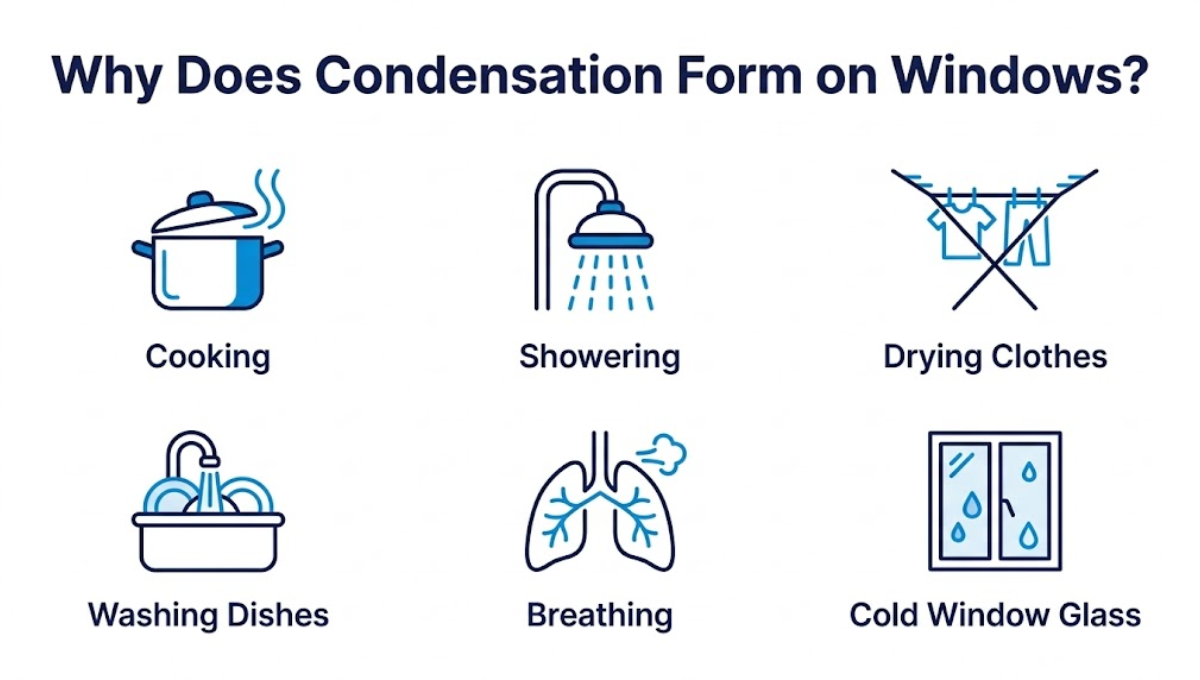
What causes condensation on windows? The main cause is warm, moist air meeting a cold surface. When the air cools against the glass, it cannot hold the same amount of moisture, so water forms on the window.
Relative Humidity is an important part of this process. It describes how much moisture is in the air compared with the maximum amount the air can hold at a particular temperature. As humidity rises, condensation becomes more likely when indoor surfaces are cold.
Common sources of indoor moisture include:
- Showers and baths
- Cooking and boiling water
- Drying clothes indoors
- Houseplants and aquariums
- Poorly ventilated rooms
- High occupancy in bedrooms and living spaces
How to Stop Condensation on Windows: Quick Fixes
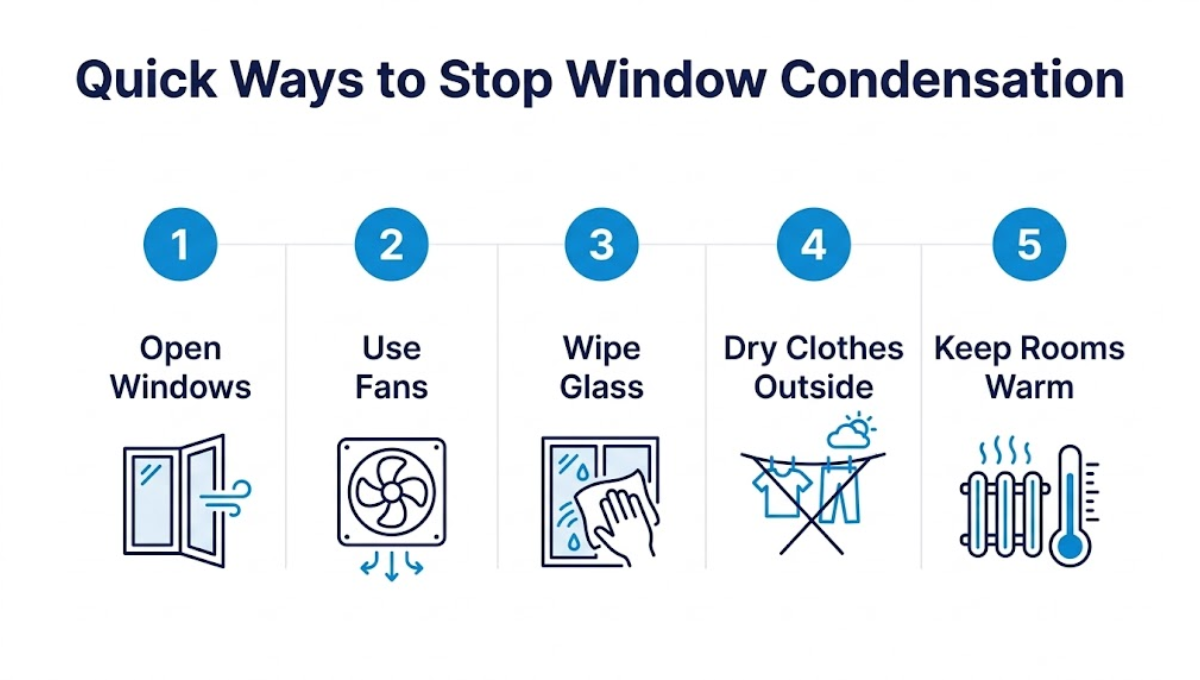
How to stop window condensation? Start by reducing indoor moisture and improving airflow. These simple steps can often make a visible difference within days.
First, wipe away water from the glass and frames. This prevents moisture from sitting on surfaces for long periods. It also reduces the chance of mold on windows and surrounding areas.
Next, use extractor fans when cooking or showering. Keep bathroom and kitchen doors closed during these activities so humid air does not spread around the home.
Opening windows for short periods can also help. Even a few minutes of fresh airflow can remove humid air. However, avoid leaving windows wide open for long periods if this makes the room cold and uncomfortable.
Try these practical habits:
- Dry wet clothes outside where possible.
- Use lids on pans while cooking.
- Run bathroom extractor fans during and after showers.
- Keep vents clear and working.
- Leave some space between furniture and external walls.
- Wipe wet glass in the morning.
- Check rooms with repeated damp or musty smells.
Long-Term Solutions for Window Condensation
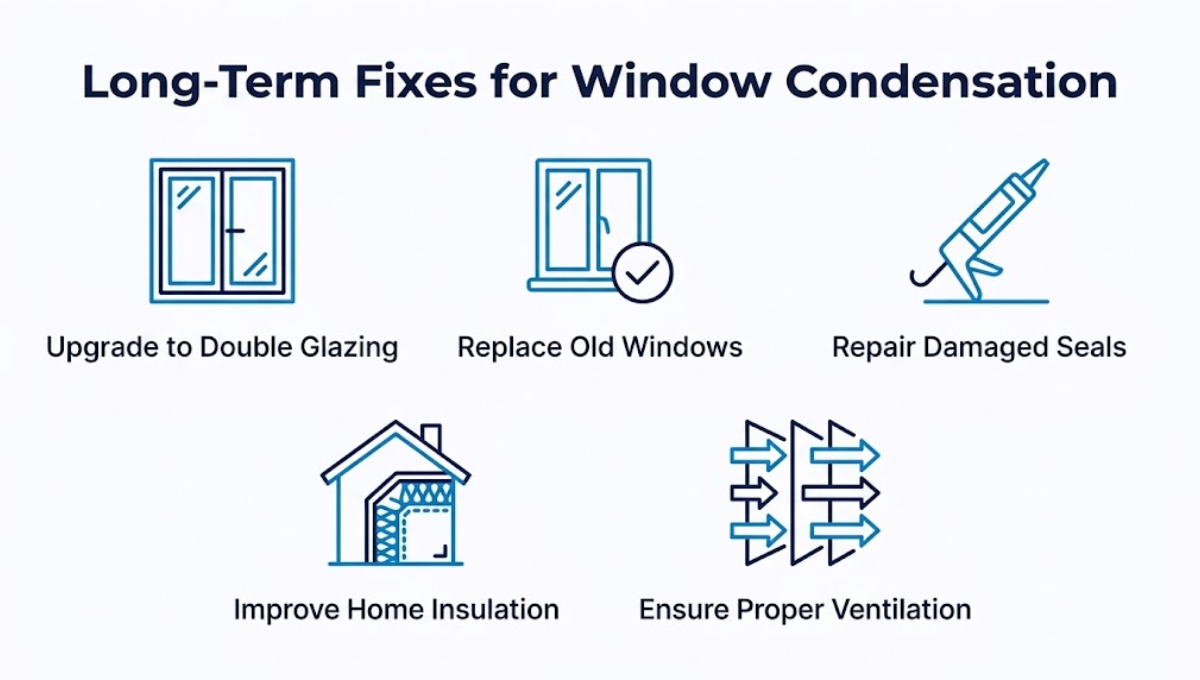
For homes with repeated condensation, long-term improvements can offer better comfort and protection. The right solution depends on the condition of the windows, indoor humidity, and the age of the property.
A dehumidifier can reduce excess moisture in rooms where humidity stays high. It can be especially helpful in bedrooms, utility rooms, bathrooms, or homes where clothes are dried indoors.
However, a dehumidifier should support good ventilation rather than replace it. It removes moisture from the air, but it does not fix cold glass, damaged seals, or poor insulation.
For best results, use the appliance in rooms where humidity regularly becomes high. Also, empty and maintain the unit as recommended by the manufacturer.
-
Improve Ventilation
Good ventilation gives humid indoor air a way out. Use extractor fans in kitchens and bathrooms, keep trickle vents clear, and allow fresh air into rooms when practical.
If your home has a mechanical ventilation system, make sure it is maintained properly. Blocked filters or poorly working fans can reduce airflow and allow moisture levels to rise.
Good ventilation is especially important after showers and cooking. Therefore, allow extractor fans to continue running for a suitable period after these activities.
-
Upgrade Windows
Older glazing can leave the inner glass surface colder during winter. Newer systems can help keep the internal glass warmer, which reduces the temperature difference that causes water to form.
Single pane windows are especially prone to cold internal surfaces. Double pane windows provide better insulation because the space between the panes helps slow heat transfer. Triple pane windows can provide even higher insulation where the property, budget, and design make them suitable.
For homeowners planning window replacement, it is worth looking at the complete window system. Glass, frames, seals, installation quality, and ventilation all matter.
A modern window can also improve comfort, security, and energy efficiency. Therefore, replacing older units may offer benefits beyond reducing moisture.
-
Seal Leaks and Improve Insulation
Cold draughts and gaps around frames can make some parts of a window much colder. Check seals, frame joints, and surrounding areas for signs of damage.
Good window insulation condensation control starts with reducing cold spots. Professional inspection can help identify whether the problem comes from the glazing, frame, installation, or wider wall insulation.
If you notice cold air around a frame, do not simply cover the area and forget about it. A proper inspection can identify whether the seal needs attention or the complete unit needs replacing.
Causes, Fixes & Prevention Table
| Problem | Likely Cause | Quick Fix | Long-Term Option |
| Water on the room side | High indoor humidity | Ventilate and wipe glass | Improve ventilation or glazing |
| Cold glass in winter | Poor thermal performance | Reduce room humidity | Upgrade glazing |
| Condensation inside the window | Failed sealed unit | Keep area dry | Replace sealed glass unit |
| Damp around frames | Gaps or leaks | Check seals | Professional repair |
| Repeated morning moisture | Overnight humidity | Air the bedroom | Improve ventilation and insulation |
| Damp and dark marks | Persistent moisture | Clean and dry area | Find and fix moisture source |
How Window Price Online Can Help UK Homeowners?

Window Price Online helps UK homeowners choose modern window and door solutions with practical advice and competitive pricing. With more than 20 years of experience in the double-glazing industry, the company provides products designed for comfort, durability, security, and energy efficiency.
-
Expert Advice For Better Window Choices
If you are dealing with repeated condensation, our team can help you understand whether better glazing could suit your property. We offer a wide range of uPVC windows and doors for different home styles and budgets.
Our team can help you compare:
- Different glazing options
- Window styles and designs
- Energy-efficient solutions
- Suitable frame options
- Product features and benefits
- Prices based on your requirements
-
Solutions For Condensation Between Window Panes
Condensation between window panes can happen when the sealed glass unit loses its airtight seal. As a result, moisture enters the space between the panes.
Wiping the glass will not fix this issue because the moisture is trapped inside the sealed unit. Our team can help you understand whether the glass unit needs attention or whether replacing it would be a better option.
-
Help With Misted Double Glazing
Misted double glazing is another common problem found in older or damaged sealed units. It usually appears as foggy or cloudy glass because the seal between the panes has failed.
If you notice mist inside your glazing, our team can help you understand the possible cause. We can also discuss suitable replacement options based on your window type and property needs.
-
More Than 20 Years Of Industry Experience
Window Price Online has more than 20 years of experience in the double-glazing industry. Over the years, we have worked with residential and commercial customers across the UK.
The company has completed 50+ projects, ranging from smaller window replacements to larger installations. Every project is handled with attention to detail and customer requirements.
-
Made-To-Measure Windows And Doors
Every home has different requirements. Therefore, Window Price Online offers products that can be tailored to suit your space, style, and budget.
Customers can choose from a range of window and door options while considering factors such as:
- Property design
- Available space
- Desired style
- Energy efficiency
- Security needs
- Overall budget
-
Clear Quotes And Helpful Guidance
Choosing new windows is a major home improvement decision. Therefore, knowing the expected cost before ordering is important.
Window Price Online can provide quick quotes based on your requirements. The team can also explain product choices, delivery requirements, and other important details before you make a purchase.
Conclusion: Find the Right Solution for Your Home
Condensation on windows can be frustrating, but it is usually easier to understand once you know how moisture and temperature work together. Start with simple steps such as better ventilation, lower indoor humidity, and regular cleaning of wet glass.
Window Price Online offers made-to-measure uPVC windows and doors for UK homeowners who want practical, attractive, and affordable solutions. If you need advice about condensation on windows, glazing options, or a new quote, contact us today on 03330040095.
You can also explore our other window and door blogs for more useful advice on choosing, buying, and maintaining the right products for your home. For delivery charges, ordering guidance, or product information, contact us today, and our team will be happy to help.
Frequently Asked Questions
Is condensation on windows always a sign of a problem?
No. Some condensation is normal, especially during cold mornings. It becomes more concerning when it is heavy, persistent, or linked with damp, mold, damaged frames, or water collecting around the window. A small amount that disappears after ventilation is usually less concerning. However, daily moisture that stays for hours deserves attention.
Can condensation damage my windows?
Yes, persistent moisture can contribute to staining, damaged finishes, mold growth, and deterioration around frames. If water repeatedly collects on a sill, dry it and investigate why it keeps returning. The sooner you deal with excess moisture, the easier it is to protect the surrounding areas. Good ventilation and suitable glazing can both help.
What should I do if I have condensation inside the window?
If moisture appears inside a sealed glazing unit rather than on the room-facing surface, the unit may have a failed seal. This type of window condensation repair may require replacing the sealed glass unit rather than simply cleaning it. A professional can check the unit and advise whether a repair or replacement is more suitable.