Summary: Draughty windows make homes significantly less comfortable, raise utility bills, and can lead to moisture around the windows. Windows may have drafts for several reasons, including installation issues, worn or failing window components, frame cracks, and gaps around older, unglazed windows. Generally, drafts may be sealed with replacement window adhesives and seals, seals and adhesive tape, caulk, and hardware.
How to Fix Draughty Windows: Common Causes and Easy Solutions
How to Clean Windows? Window Weather Stripping How to Stop Cold Air Coming Through Windows
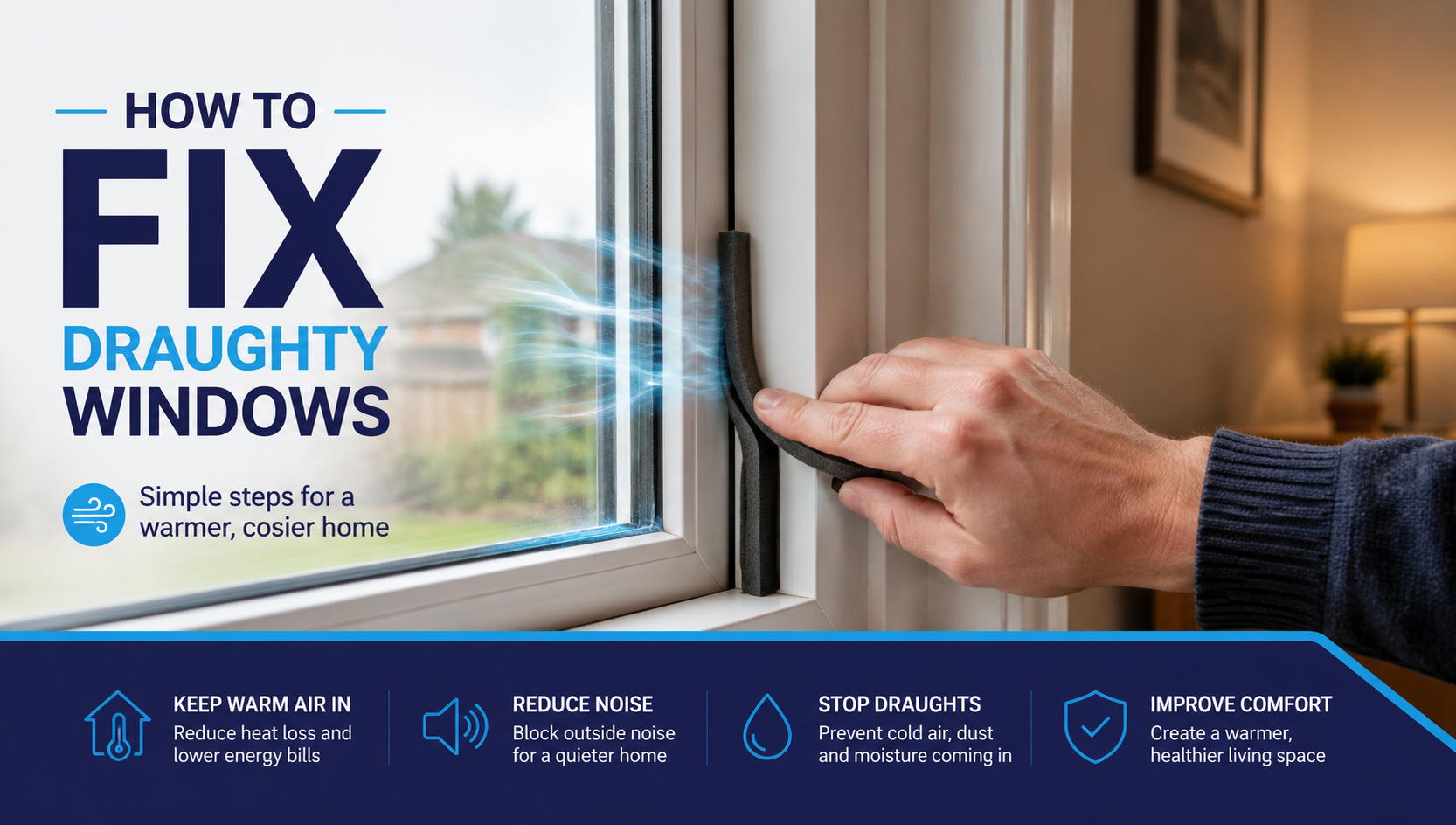
Draughty windows are a huge issue for many homes in the winter. They let cold drafts in and let warm air escape, only to raise energy bills. They will negatively affect overall room comfort and the heating system’s efficiency and may even lead to increased condensation.
Draughty windows don’t always require complete replacement windows. Adding or adjusting seals and performing minor repairs can fix some issues. However, if the window is old or damaged, it may be a better long-term investment to replace the window completely.
This guide will help you identify the main issues causing draughty UPVC windows and help you come up with a solution.
What Are Draughty Windows?
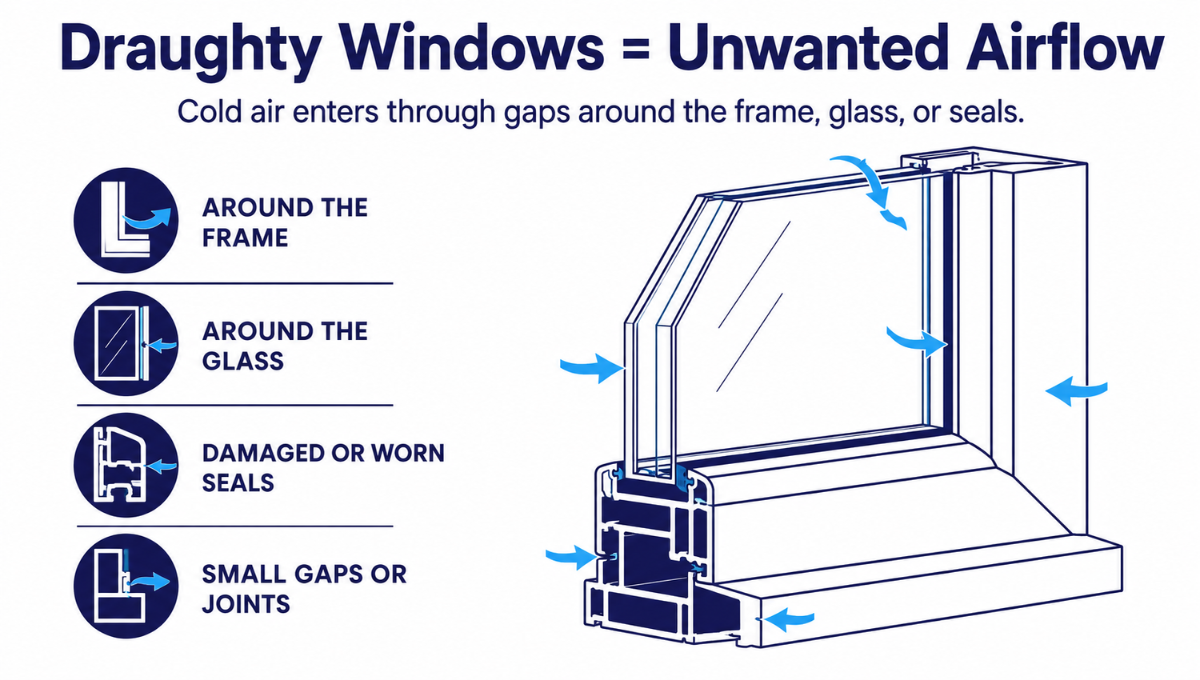
Draughty windows are not functioning as intended. Sealed windows should not let outside air pass through; however, draughty windows are usually poorly sealed or are letting air pass through cracks, crevices, or frame gaps. Improperly fitted frames should not be an issue in new-build homes or homes without wear and tear.
You may feel a draft or a cold airflow around the window frame when fully sealed windows should not be letting any outside airflow in. Sometimes the draught issue may be a missing or broken seal. Other times, the draught may be coming from a gap that visually looks as if it is fully sealed.
Draughts make your home less comfortable. They drive up the cost of heating your home while taxing your heating system.
Common Signs of Draughty Windows
Before you try to remedy the issue, you need to figure out if your single glazed windows are, in fact, draughty. Some signs of this include:
- Cold air coming in through the edges
- Curtains shifting even when the windows are closed
- Windy weather creates whistling sounds
- Higher heating bills
- Cold spots by the windows
- Condensation around the window frame
- Difficulty warming the room
- Gaps, cracks, damaged seals, etc.
- Loose window handles or windows that do not close tightly
If you notice any of the symptoms listed above, the windows may just need window weather stripping or adjusting. They may also need repair or replacement.
Main Causes of Draughty Windows
There can be many different causes of draughty windows. Knowing the cause can help you figure out the most applicable solution.
1. Worn or Damaged Window Seals
Window seals fill the gap around the window sash. Seals age and lose their effectiveness, allowing air to circulate the window frame.
The window seal will deteriorate from damage from the sun, moisture, and the frequent opening and closing of the window. Once the rubber seal has lost the ability to tightly close the window sash, it will allow drafts into the room.
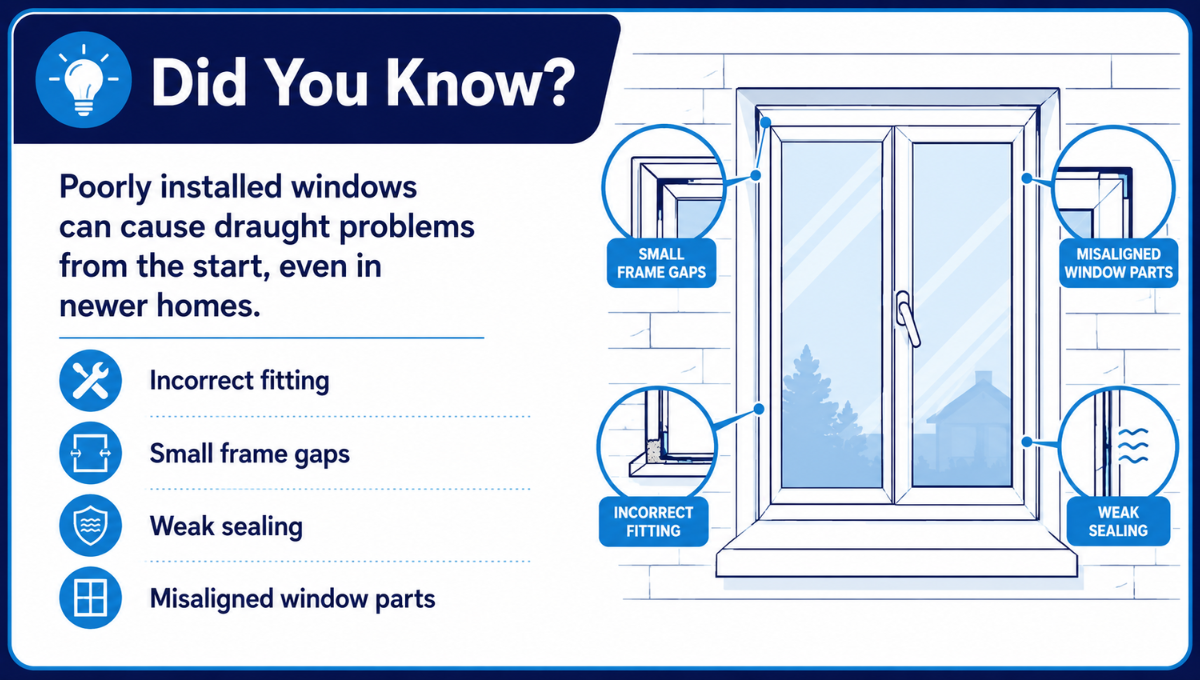
2. Poor Window Installation
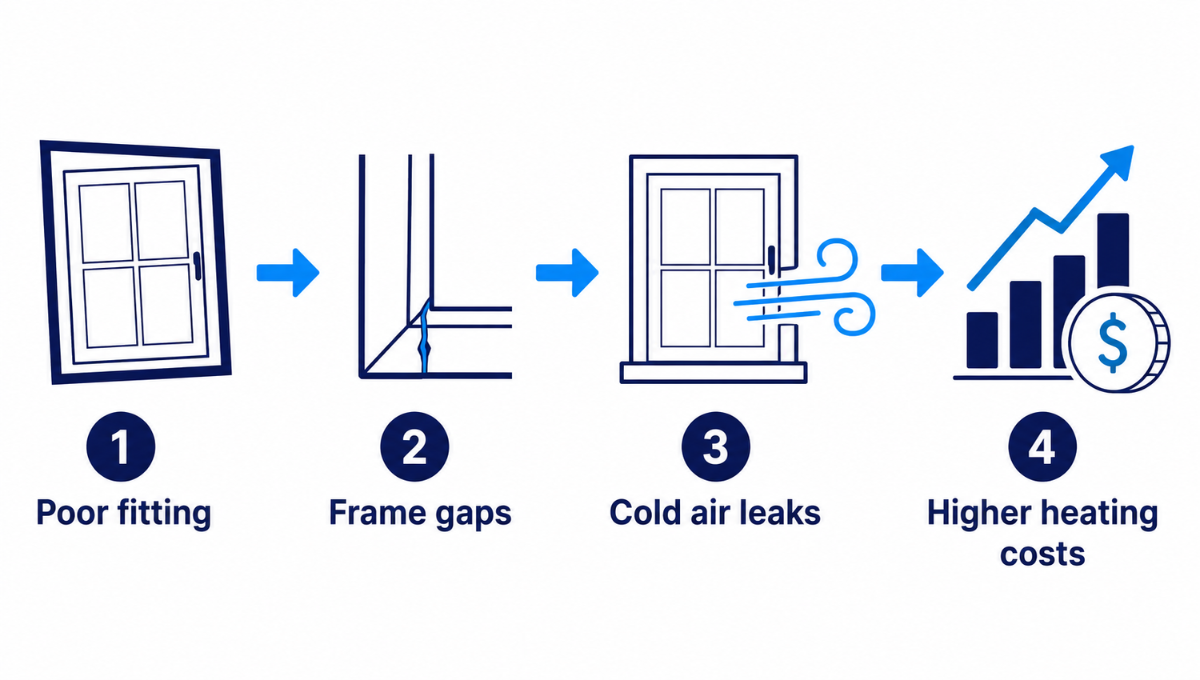
High-quality double glazed windows can be a source of drafts if installed poorly. The frames can be installed with gaps, be misaligned, or have improper sealing to the wall.
This is especially the case if windows are installed quickly and are not properly insulated or finished. Gaps in the outer frame can lead to cold air traveling through the wall and into the home.
3. Old or Warped Window Frames
Window frames are susceptible to movement as a result of the environment. Wooden frames are even more vulnerable to swelling and rotting due to decay. Older uPVC window frames and metal frames are also liable to become deformed and loose.
When the frame changes shape, windows can no longer close along their edges, and air can freely pass through, resulting in drafty spaces.
4. Loose Hinges or Handles
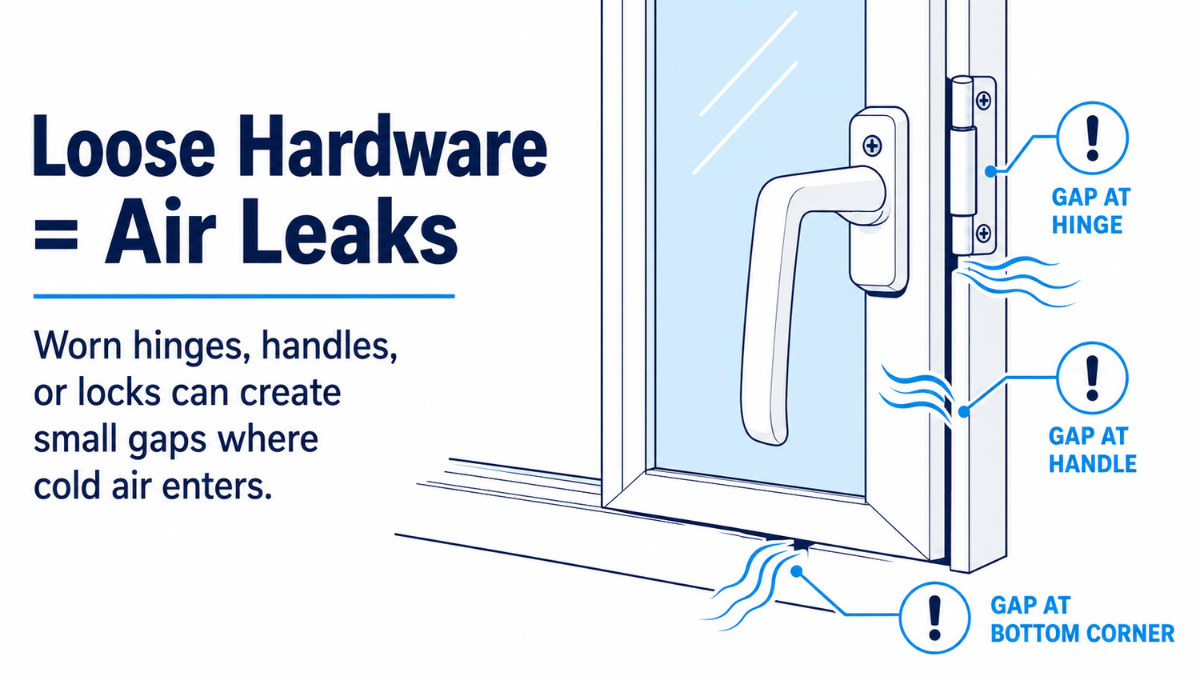
A draught could also be a hardware problem. If the window is unable to close tightly, the hinges, locks, and handles could be the reason. Their damage could cause a draught also.
If the window does not close firmly against the frame, the sash could be a problem. Air could be entering through the edges. This could be the problem with older uPVC, casement, and tilt-and-turn windows.
5. Cracks Around the Window Frame
Cracks might develop where the window frame meets the wall. Likely causes include the movement of the building, poor plastering, old silicone sealant for windows, and damage from the weather.
Draughts can enter through even small cracks. They can also let moisture in, which can create damp patches and mould which are damp.
6. Failed Double Glazing
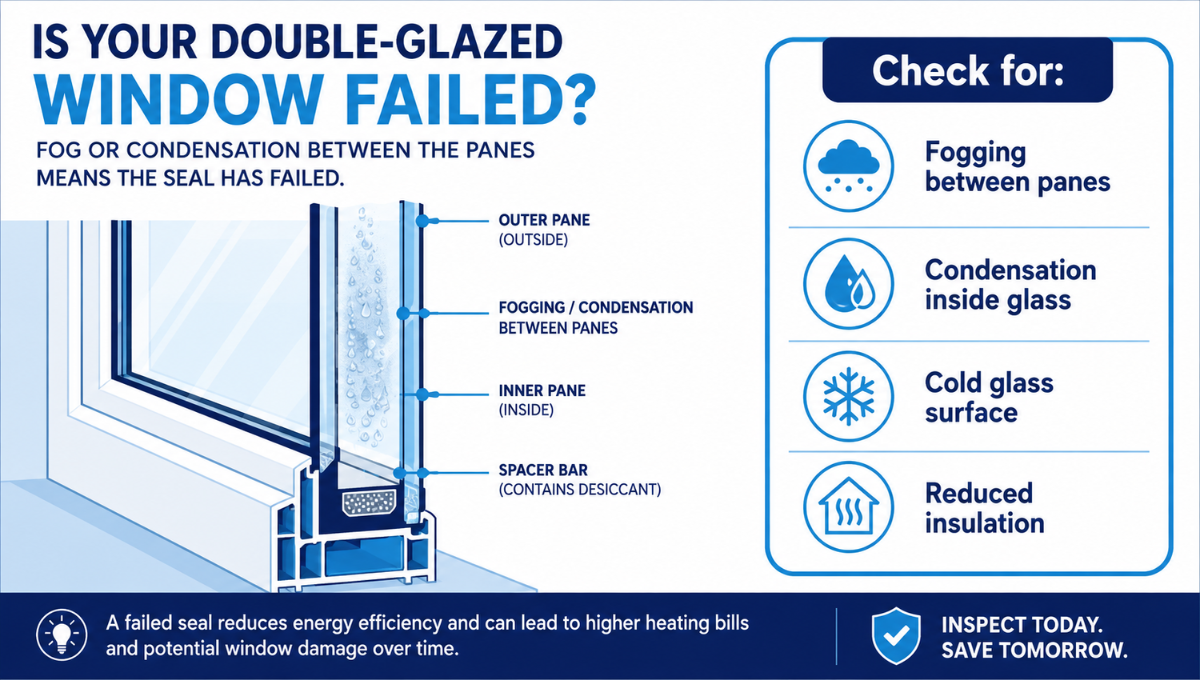
Double-glazed windows are constructed of two panes with a gas-filled space between them. If the seals around the panes of glass fail, moisture can accumulate between them, resulting in condensation or fogging of the internal glass.
A single faulty double-glazed unit will generally not create a significant draught, but will create a window that is colder to the touch and will reduce window insulation. If there is also damage to the window frame or seals, the draught can become more severe.
7. Gaps in Old Timber Windows
There are several causes of draughts in traditional timber windows, including loose joints, gaps caused by shrinkage, worn-out putty and decaying paints. Due to the moving parts and the thin spaces in the frame, sash windows are the most susceptible to draughts.
While it is possible to repair timber windows, the process often involves restoration or the application of draught-proofing and sealing.
How to Check Where the Draught Is Coming From?
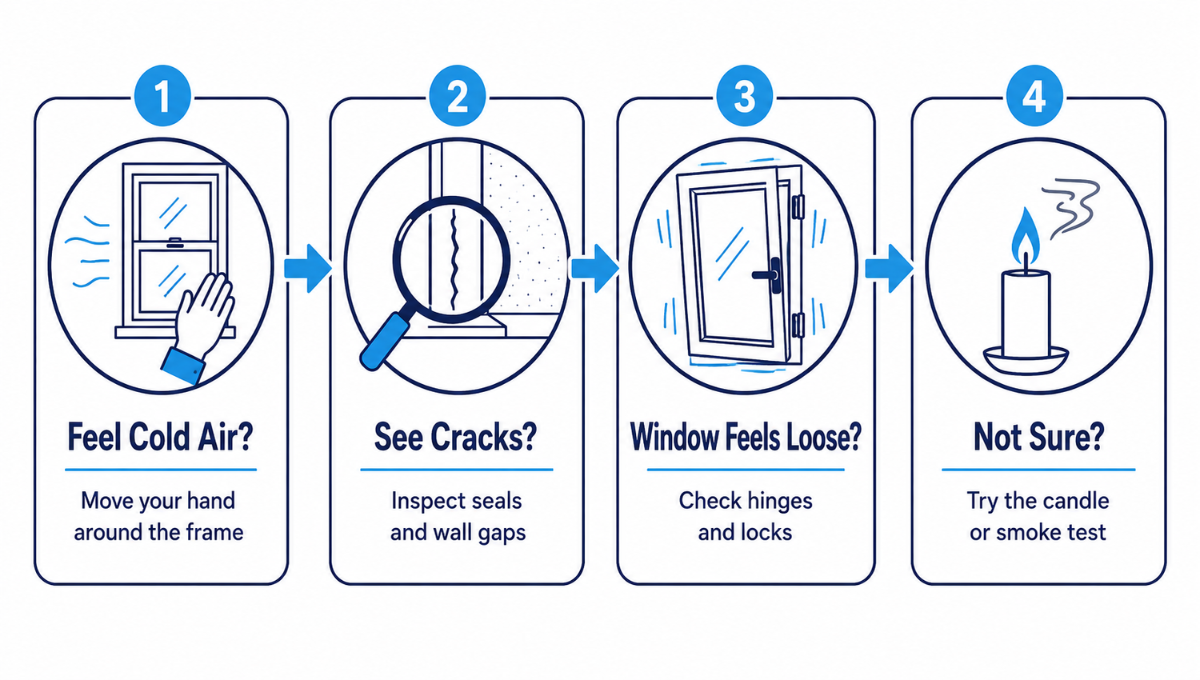
Locating the source of the draught is the first step before you can apply any solution.
Move Your Hand
On a cold or blustery day, run your hand along the edges of the window. If you feel cold air, there’s a draft in that section of the window.
Look for Gaps
There may be a draft if there are cracks in the window frame, wall, or seals, or if the window does not sit flush.
Inspect the Locking Mechanism
If the window still feels loose after locking, there may be a draft due to a hinge or locking point obstruction.
Candle / Smoke Test
Air leaks if the flame of the candle or incense stick you hold near the window edges flickers, or if the smoke moves.
How to Fix Draughty Windows?
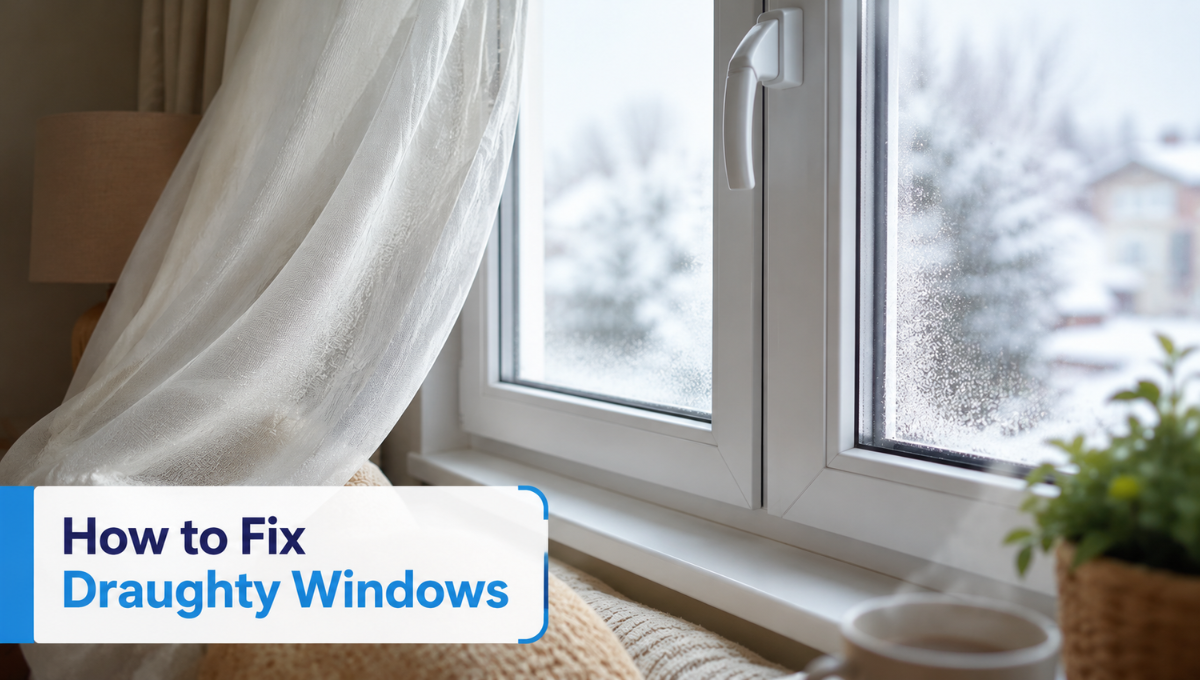
Some fixes require a professional, but others are cheaper or quicker to implement. Drafts are best eliminated by determining the cause of the leak and correcting it.
Replace Worn Window Seals
Cracked seals permit draughts. Window seal replacement aids this. In many uPVC and aluminium windows, gasket seals can be easily removed and replaced with new, correctly-sized gaskets. Remove the old gasket and clean the groove before placement. Press the new gasket into the groove.
Apply Draught-Proofing Strips
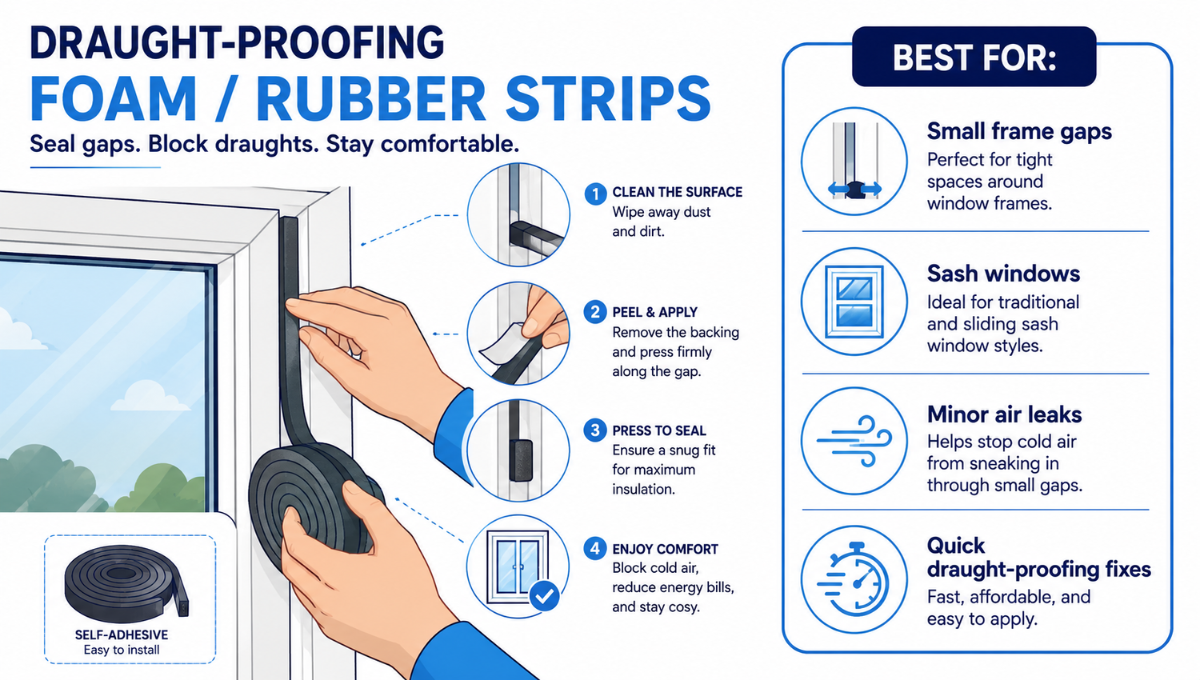
Draught-proofing strips are a convenient tool for small window frame gaps. They are available in a variety of materials like foam and rubber. Self-adhesive strips stick right to the window frame, and brush strips are ideal for sash windows. Make sure you dry the area and remove any dirt before applying. A thick draught proof window strip can lead to windows that don’t close.
Reseal Around the Window Frame
If the draught is coming from the gap between the window frame and the wall, resealing may resolve the issue. Over time, old sealants can crack, shrink, and peel away. Remove all loose and old sealant, clean the area, and put down a good interior or exterior sealant. This will help to stop the cold air and moisture from coming through the frame.
Adjust Hinges and Locks
Windows that do not close tightly may require an adjustment of either the hinge or lock. Worn hinges or handles, or locking points that are out of alignment, will create gaps around the sash. Adjusting or tightening window hardware will allow the window to close against the frame, eliminating the gap.
Fill Cracks Around the Frame
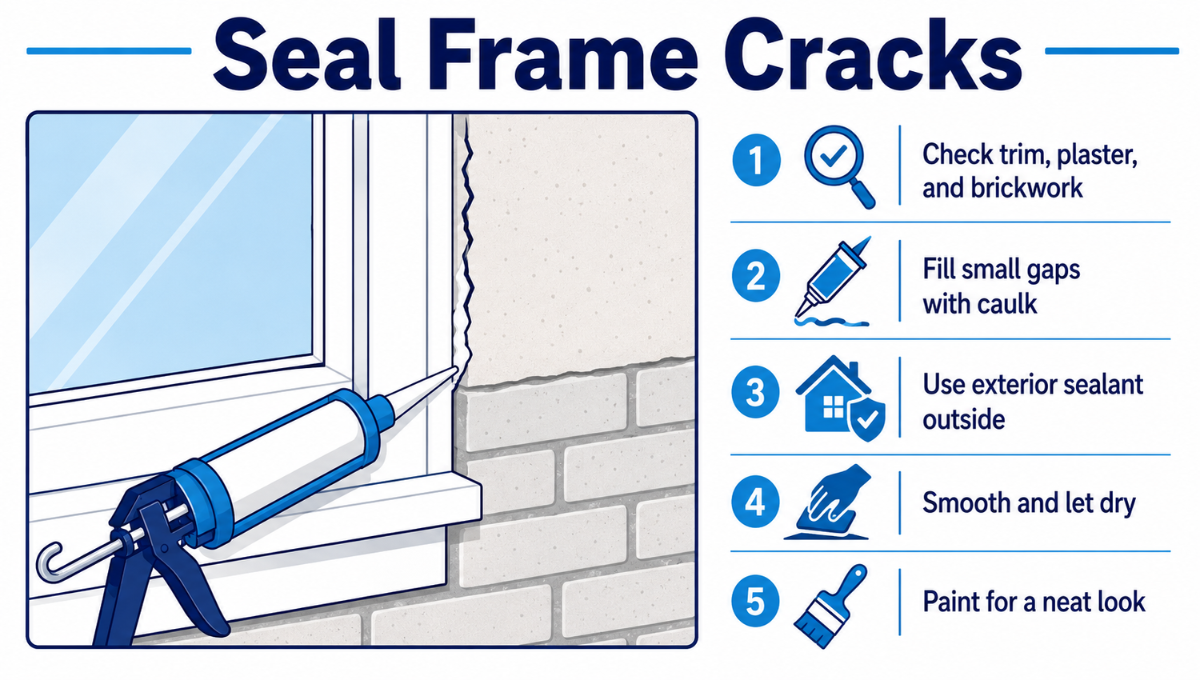
Trim, plaster, and brickwork can have cracks that let cold air into rooms. Because small cracks are internal, they can be filled with decorator’s caulk or filler. External cracks that are larger need stronger weatherproof sealants. After filling, the area should be smoothed and dried and then painted to create a neat finish.
Repair or Replace Damaged Hardware
A draught can occur when certain window hardware is damaged. Handles, locks, hinges, and friction stays may all wear out and prevent a window from closing properly. Replacing damaged hardware aids in the reinforced fit of the window and can be more cost-effective than a window replacement.
Use Secondary Glazing
One of the window draught solutions is secondary glazing, which is when another layer of glass or acrylic is added to an existing window. This improvement to the window helps reduce draughts and outside noise as well as improve insulation. This solution is perfect for older homes and buildings that are listed or when full window replacement is not a possibility.
Install Thermal Curtains or Blinds
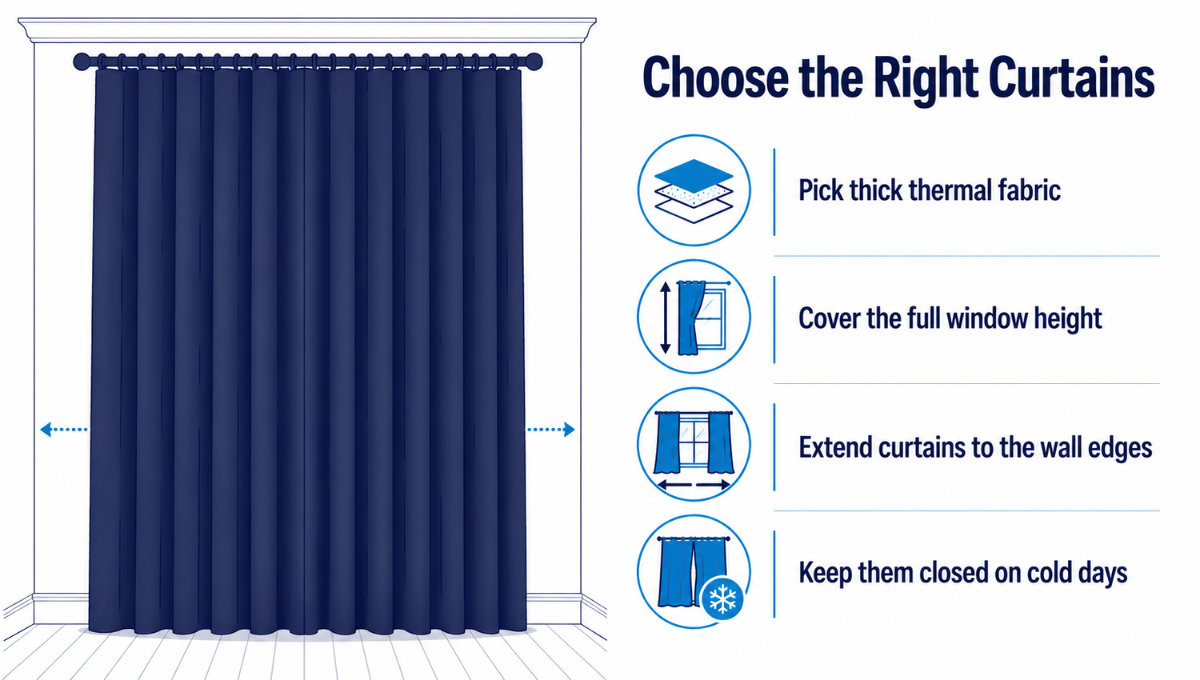
Thermal curtains and insulating blinds can reduce heat loss through upvc windows. They won’t fix a draft, but they can help with comfort while waiting for a more permanent fix. The best curtains for this are thick, go all the way down, and go all the way to the edge of the wall.
Repair Timber Windows
Timber windows can be draughty due to gaps, rot, loose joints, and worn putty. More often than not, draughty timber windows can be repaired rather than replaced. Examples of repairs include the following: rotten wood replacement, frame repainting, brush seals application, putty replacement, sash cord repairs, and fit closing improvements.
Replace the Window
If a window is old, inefficient, and difficult to function, replacement may be the better option. Replacement window options include double- or triple glazing windows, which are better insulators and which are better at keeping draughts out. They are better at keeping the building secure and comfortable.
Benefits of Fixing Draughty Windows
Window draught proofing provides lots of advantages in addition to comfort.
Greater Energy Efficiency
When your home retains warm air, your heating system won’t have to work as hard. This drives down heating and energy usage.
Lower Heating Bills
Draughts make heating bills go up because they allow your home to lose warmth quicker. Sealing your windows helps keep your rooms warmer for longer.
Improved Comfort
A room without a draught is more comfortable in the winter. You can also sit next to the cold window without a cold breeze coming in.
Reduced Condensation
Cold air can make it hard to insulate your home and can cause condensation. Fixing draughts can help stop moisture around the upvc window parts.
Better Noise Reduction
Window seal repair can stop most external noises, making your home more peaceful.
Increased Property Value
Your home becomes more attractive and in better condition overall with sealed windows and better energy efficiency.
Window Price Online: Where Quality Meets Reliability
Choosing a reliable supplier is an integral part of selecting the best uPVC doors and windows. With unequaled excellence and the most competitive prices for uPVC windows and French and bi-fold doors, Window Price Online has established itself as a market leader in the UK. The pillars of the company focus on developing and deepening relationships of trust with their customers through completed goals and satisfied customers. Whether you are improving your home or starting a completely new project, Window Price Online offers the best uPVC doors and windows and an excellent team of professionals.
Final Thoughts
Windows that let in drafts can be a significant energy drain for your home. They can be cold and uncomfortable to sit near and make the whole room feel chilly. There can be a variety of reasons for drafts, including failing frames, poor installation, and loose or worn seals and hardware. In a lot of cases, draught-proofing strips for windows or resealing the frame can seal most of the gaps.
The replacement of the entire window may be more effective. In addition to the energy cost, it would improve the quality of your living space, improve protection from the elements, and simplify your maintenance. Contact us for a free quote to find uPVC windows, French doors or bi-fold doors.
FAQS
Why Does a Draught Come through My Closed Windows?
A draught can occur when a window has a faulty or old seal, when hinges or locks are loose, or when there are gaps in the window frame due to poor or incorrect installation. Sometimes even when a window looks closed, it is not sealed against the frame.
How Do I Stop Draughts Coming Through My Windows?
Experimenting with draught-proofing strips, replacement seals, sealant, or hardware that is installed in a better way are all minor fixes that can be done by a homeowner. Most frame issues, failed double glazing, and poor installation will require a professional.
Should Draughty Windows Be Repaired or Replaced?
The window itself will determine this. Repairing a window can be a good idea when the frame and glass are not old and in bad condition. When a window is in a bad state of repair, has a poor seal, has old hardware, or has old, inefficient triple glazing windows, replacement is almost certainly the better option.