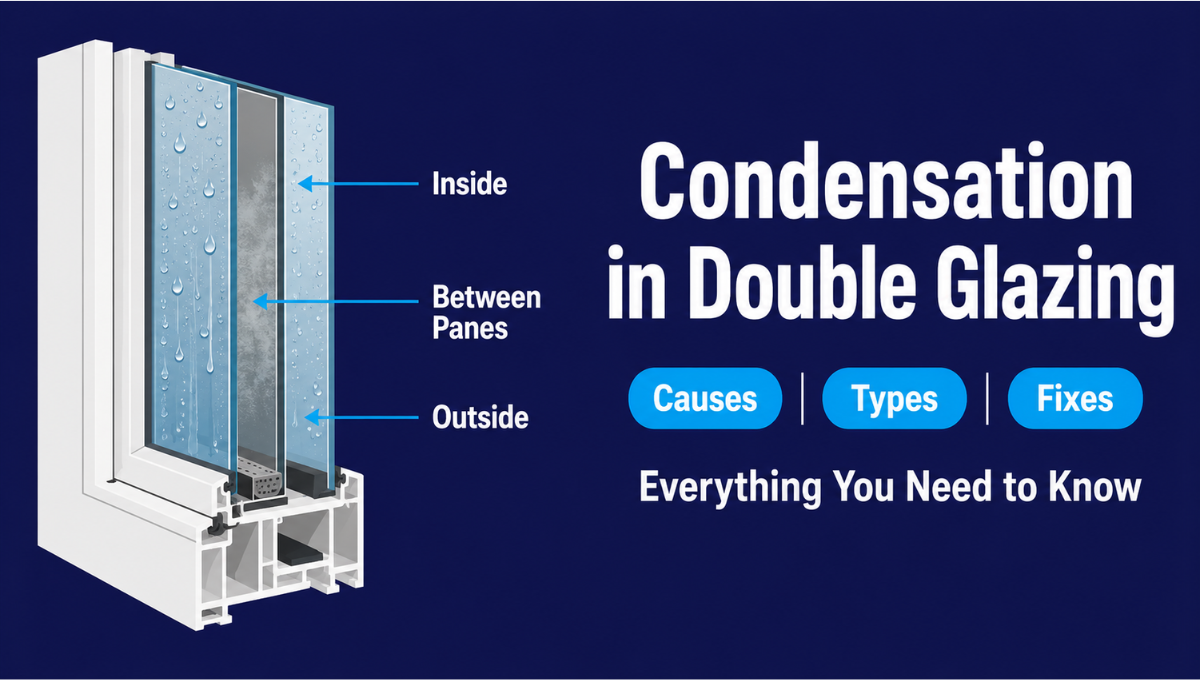
Summary: Condensation in double glazing can occur on the inside or the outside panels, or can even form between the panels. Each of these scenarios relates to different conditions, namely high humidity and poor ventilation. Seal failures are usually indicated by visible condensation forming on both panels.
_____________________________________________
Condensation in Double Glazing: Causes, Types & How to Fix It
Double Glazed Windows | How to Stop Condensation on Double Glazed Windows in Winter? | How to Get Rid of Condensation on Windows?
In winter months, condensation is an issue in almost every home. This is caused by a few things. The most obvious is the varying air temperatures inside a home vs the temperatures outside. When colder air hits a window pane with warm air on the other side, moisture forms on the glass. Continued build-up of moisture on the glass can lead to more serious issues, including insufficient air circulation, humidity, and problems with the window itself.
Double-glazed UPVC windows provide thermal insulation that single-glazed windows lack. They achieve this with the use of two panes of glass separated by a sealed air or insulating gas gap. As with all thermal insulators, the primary goal is loss reduction.
Understanding where the moisture is present also highlights the possible solution. For moisture on different sections or surfaces, the cause and therefore solution vary. This guide outlines the primary causes of condensation between double glazing, types of condensation, warning signs to look for, and the best ways to tackle the issue.
What Is Condensation in Double Glazing?
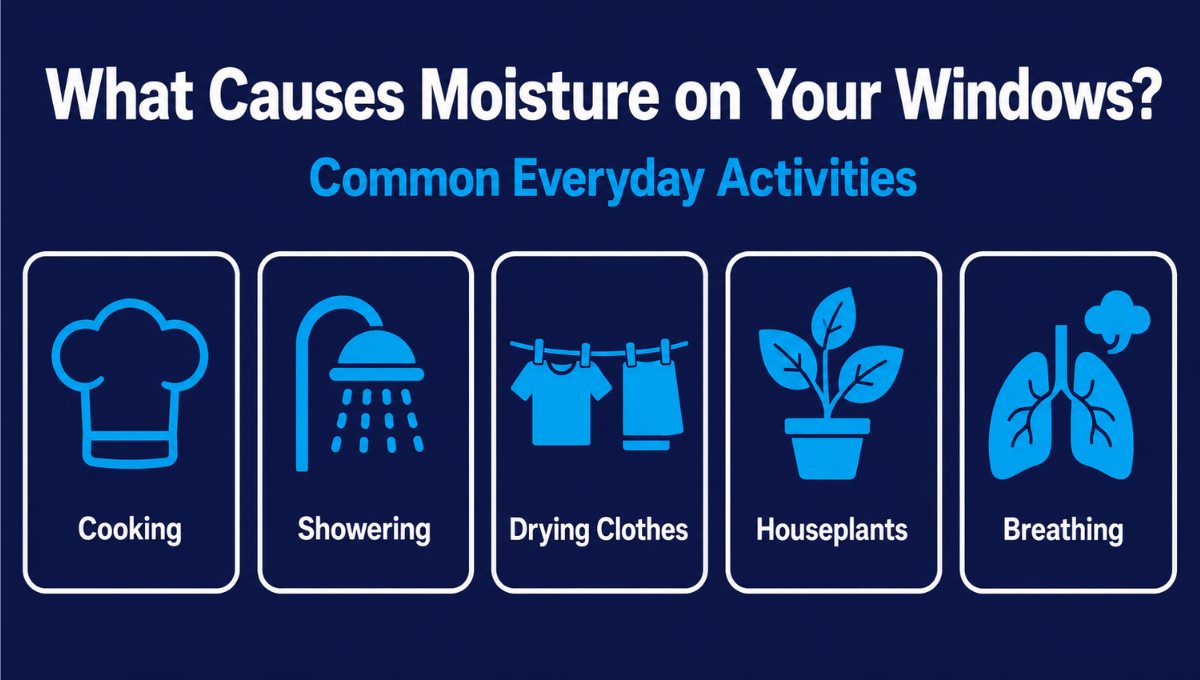
Condensation in double glazing happens when warm, moist air comes into contact with cold enough surfaces, allowing the moisture to turn into liquid. Everyday activities add moisture to indoor air. Cooking, showering, drying clothes, breathing, and keeping indoor plants can all increase humidity.
When moist indoor air meets a cold window, the air near the glass cools quickly and forms water droplets.
This will cause moisture to form on the glass. In a double-glazed window, the interior pane will typically be warmer than the pane in a single-glazed window, reducing the probability of condensation. However, this double glazing condensation will not solve the problem completely, especially when there is a high level of indoor moisture and poor ventilation.
If you’re wondering why windows get condensation, it usually happens when warm, moisture-filled air comes into contact with a colder window surface, causing the water vapour to turn into droplets.
Types of Condensation in Double-Glazed Windows
There are three main areas where condensation in double glazing can occur.
Condensation on the Inside of Double Glazing
Internal condensation is visible on the window that faces the room. This happens because of high levels of moisture in the air with cold glass surfaces. You will notice this in bedrooms, kitchens, bathrooms and utility rooms. Some of the factors that cause this include:
- Lack of ventilation when cooking
- Taking long, hot showers
- Drying clothes indoors
- Poor circulation of air through the property
- Keeping draught-proof windows closed
- Humidity in the air
- Inefficient extractor fans
- Large indoor plant collections
Not having proper ventilation for a short time is not an indication there is something wrong with the window. However, draughty windows that remain wet for a long time can begin to affect window frames, seals, walls, curtains and other finishings.
Condensation on the Outside of Double Glazing
Condensation on windows occurs most frequently on their outer surfaces. Concerns about outdoor condensation are often unwarranted. In fact, it could indicate that the double-glazed units are performing well.
Well-performing double glazing effectively prevents heat from escaping the room beyond the first pane of glass. This means that the outer glass pane will stay cold. Outdoor surfaces that are cold can cause condensation from moisture in outside air to form in the early hours of a damp, cold day.
Condensation in double glazed windows that occurs on the outside of the glass will burn off or evaporate when the temperature increases or when the sun comes out to shine on the glass. Outdoor condensation is normal and usually does not require corrective action unless you notice other signs of a problem.
Condensation Between the Glass Panes
The condensation between double glazing that gets trapped is different from other types of condensation. It requires a more detailed analysis.
Double glazing is set to be a sealed system. This means there should never be any moisture in the gap. If you ever notice mist, condensation, fogging, or even cloudiness within this sealed gap, it means water has somehow entered this gap because the water-tight seal has broken down. Signs of this failure include:
- Misting between the two panes of glass that persists
- Cloudy glass on both sides
- Water droplets that are unaffected by attempts to wipe them off
- Unexplainable moisture in the room when the window is opened
- Decreased transparency of the window
Once moisture enters the sealed unit, improving air circulation usually cannot resolve the problem. If you want to know how to stop draughts from uPVC windows, check worn seals, adjust the window hinges and locking points, and replace damaged weatherstripping to create a tighter seal.
What Causes Condensation Between Double Glazing?
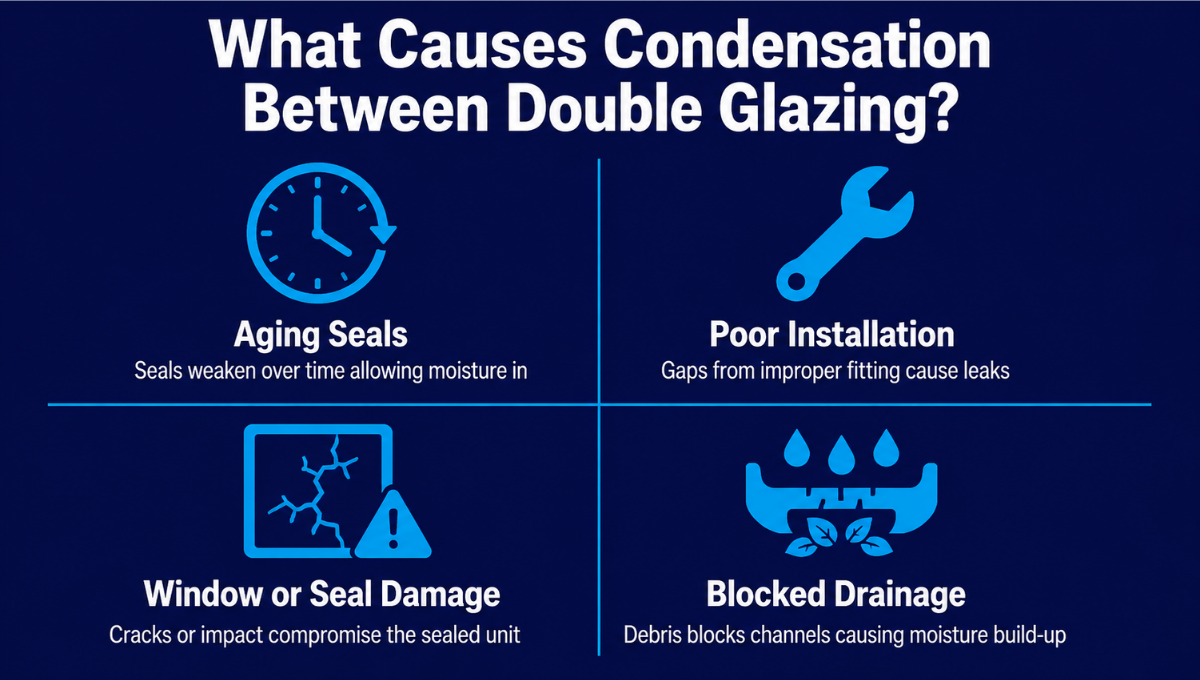
There are many causes of condensation, deterioration, or the total failure of insulated glass unit seals.
Aging Seals
As a seal ages, moisture may penetrate the cavity between glass panes. Effective seals are required in the construction of insulated glass units.
Those seals need to withstand stresses of changing temperatures, continuous sunlight, moisture exposure, and thermal movement. The double glazing seal of a window must remain intact, as movement over time may create an opening.
Poor Installations
Joints, spacers, and packs may become disturbed during poor installation of an insulated glass unit. This may create gaps that then allow water leakage and moisture intrusion. Improper installations may include poor window alignments and drainage.
Execution Failure
Damage to any part of a window system may compromise the integrity of the sealed glazing. Seal failure may be caused by cracked window systems, distorted window frames, or damaged or impacted glazing units.
Moisture in the System
The drainage of insulated glass units is often constructed with channels to control the flow of water. Pollen, dust, insects, and other animal nesting materials may block the control channels. This may cause moisture to build up and seals to fail.
Is Condensation Inside Double Glazing a Serious Problem?
Though the impact of moisture between window panes is usually longer term, this issue is not something that can be ignored. As the sealed cavity between window panes provides thermal insulation, the intended sealing of glazing units breaks down in the presence of moisture.
Aside from losing thermal insulation, condensation in double glazing between window panes will obstruct visibility and impede the window’s aesthetic. If moisture is present in the glazing unit, the insulating capability of the glazing unit also reduces over time. Thermal insulation can also be lost and a visible obstruction created between window panes.
Repeated moisture exposure can cause degradation of window components and surrounding material. As glazing units can be thought of as serving a limited function, the deterioration or failure of multiple units may be a sign that the window glazing units need to be replaced.
How to Fix Condensation on the Inside of Double Glazing?
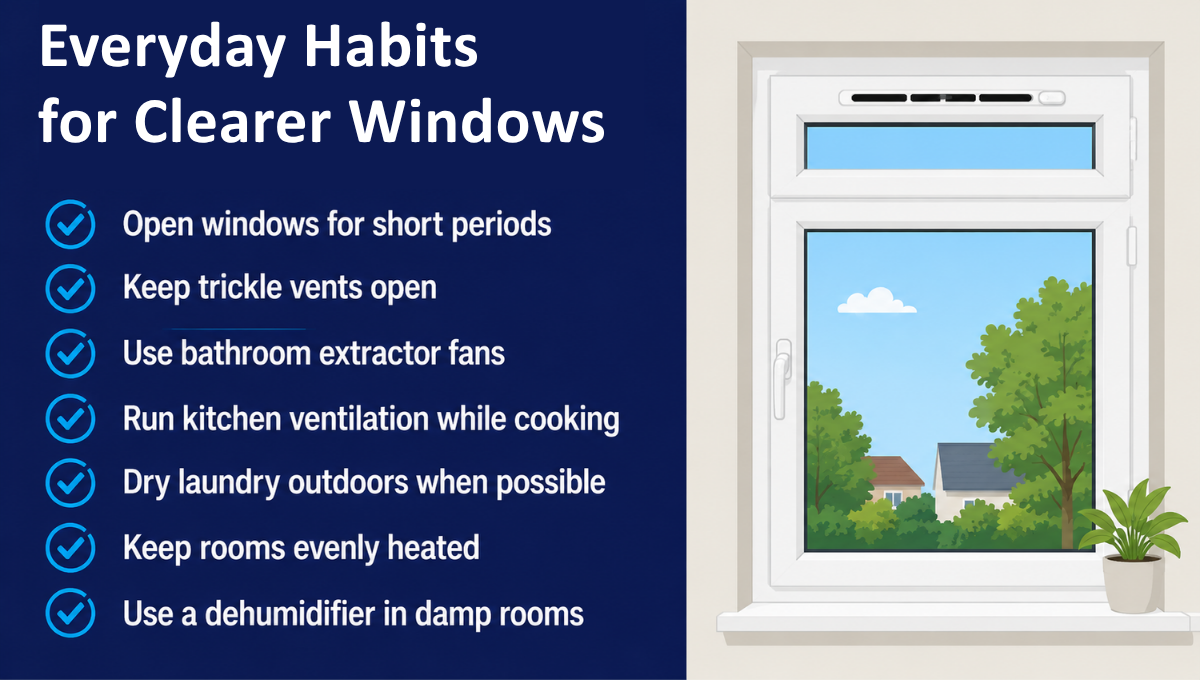
To eliminate room-side condensation, you should try to reduce the amount of humidity in the air and improve air circulation.
Improve Air Circulation
Air circulation helps remove humid air from inside the room and replaces it with less humid air. Take advantage of opportunities to open a window for a short period of time. This is especially useful after an activity that creates a large amount of moisture. Leave all trickle vents open to maintain background ventilation.
Use Extractor Fans
Bathrooms and kitchens are the main sources of humidity in a household. Always have extractor fans running in the kitchen and while taking a shower or a bath. Moisture is released into the air in significant amounts by wet laundry. Dry clothes outdoors. If this is not an option, use a tumble dryer as long as it is well ventilated. If indoor drying is unavoidable, keep the room well ventilated.
Maintain an Even Temperature
Be careful to avoid having rooms with surfaces that become too cold. This will increase the chance of condensation. An even temperature helps keep the surfaces warmer.
Use a Dehumidifier
A dehumidifier is useful if there is high humidity. They are especially useful in rooms such as bedrooms and rooms that do not have many other ventilation options, such as basements or utility rooms.
How to Fix Condensation Between Double-Glazed Panes?
Failed sealed glazing units usually cause condensation between panes of glass. This condensation on windows in winter cannot be fixed by the common methods of removing surface condensation, such as wiping glass or improving ventilation.
Failed Sealed Glass Unit
In most cases, the best solution is to replace the insulated glass unit rather than the entire window.
The weather stripping for windows in existing frames may be kept if it is in good condition. The failed glass unit is replaced with a new sealed, double-glazed unit of the appropriate size and specification. This will improve the appearance of the window as well as the insulation.
Replace Entire Window
Complete window seal replacement should be the more obvious solution if the glazing failure is accompanied by significant failure of the window frame.
Replace the entire window if:
- Frame failure is extensive
- There are several failed sealed units
- The windows are old
- There are draughts around the frame
Poor Energy Efficiency over
You may only need to replace the glass, but a professional should inspect the window to determine whether replacing the glass or the entire system is more practical.
How to Prevent Condensation on Double Glazing?
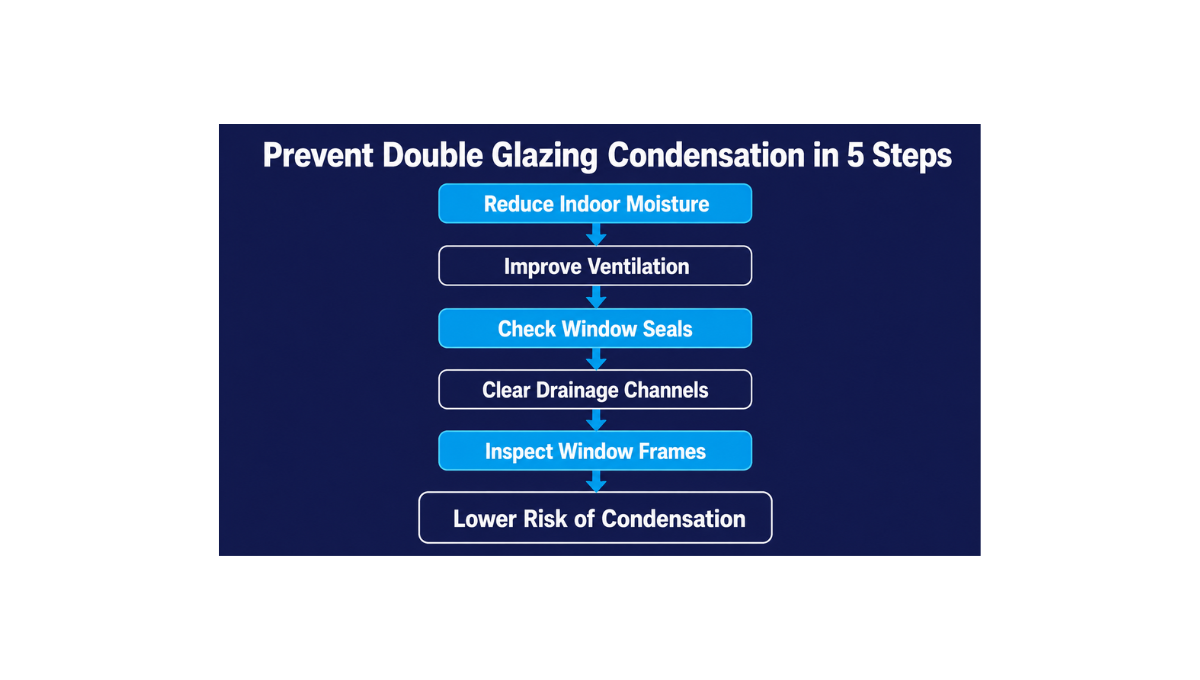
While there is no way to fully eliminate the chances of condensation between double-glazed windows, there are many strategies to minimize the chances of having continuous moisture problems.
Indoor Humidity Control
Where possible, limit the production of indoor moisture. Use extractor fans, cover pots, limit indoor drying, and ensure adequate exhaust facilities in bathrooms.
Room Moisture Control
Window Seal Checks
Loss of seals around foggy windows causes gaps to be formed, which allows moisture to enter. Maintenance should be carried out on a regular basis to prevent the build-up of moisture.
Channel Drainage Clearance
Channel drainage should be kept free of moisture and debris so rainwater can drain.
Checking Window Frames
Deterioration of window frames increases stress on glazing seals. Other materials should be kept free of cracks or distortion.
When Should You Call a Window Professional?
If condensation occurs between window panes, a professional assessment is strongly advised to check the integrity of the sealed triple glazing windows. You may also be concerned about:
- Constant misting or fogging between glass
- Standing water in the glazing cavity
- Broken window glass
- Damaged window hermetic seal
- Drafts around the window frame
- Issues closing or opening the window
- Water entering the frame
- More than one window having the same issue
A professional will diagnose whether the problem is with the glass unit or the window frame, drainage system, installation, or something else.
Window Price Online – Your Trusted Destination for Premium UPVC Windows and Doors

For reliable quality and competitively priced UPVC windows, French doors, and bi-fold doors, customers across the UK count on Window Price Online. Over the years, reliability and affordability combined with great customer feedback and a well-documented track record for window and door installations have built Window Price Online a solid reputation for dependable service. With a large selection of products and an emphasis on the customer, Window Price Online has made it easier than ever to select the window and door solutions appropriate for your property.
Final Thoughts
Double glazing usually doesn’t fail due to condensation. Understanding the position of the moisture can help you figure out the cause. Temperature, ventilation, and humidity can cause condensation on the inside of a window. Most indoor condensation problems can be fixed with more consistent heating, better ventilation, less moisture, and the installation of extractor fans in high-moisture areas.
The outside of double glazing may have moisture on it due to the window containing heat in the building. Having moisture between double glazing units often means the glazing has lost its seal. Once the seal has been compromised, the glass unit must be replaced. Addressing condensation early can avoid damage to windows and the building, and ensure the building remains comfortable and costs less to heat. Window Price Online provides high-quality UPVC windows and doors at affordable prices. Contact us today to discuss your options and find the best solution for your home.
FAQS
Why Does My Double Glazing Have Condensation between the Panes?
Condensation occurs when the seal surrounding an insulated glass unit breaks down. In this instance, air containing moisture will enter the space and fog, steam, or form droplets. Because the moisture becomes trapped between the panes, you cannot wipe it away.
If I Have Condensation Between My Double Glazing Window Panes Does That Mean It Needs Replacing?
Not always. Condensation between window panes can have many causes. One example is where condensation collects on the interior or exterior surface of a double-glazed window. If moisture becomes trapped between panes, however, then replacement of the complete framed sealed unit would be justified.
How Do I Stop My Windows Forming Condensation at Night?
There are many ways. Improve air circulation by opening a trickle vent or suggest opening the window for a short time. Avoid drying clothing indoors. Keep a consistent room temperature and lower moisture levels. A dehumidifier can help where there is chronic moisture. If moisture is trapped between the window panes, it will not resolve the sealed unit problem.